Then and now through Vigan
- Rowena Flores
- Sep 8, 2022
- 4 min read

by: Rowena Flores
I was hesitating for a while, whether or not I should write this article that is already in the list of my impending blog entries. My reluctance stemmed from the recent earthquake that destroyed many structures in Vigan and Abra. But now that more than a month has already passed since the start of its reopening, I figured that some would find the historical city’s pre-earthquake state nostalgic.
For all I know, my sisters primarily wanted to visit Vigan to take in the sight of history and also to take “aesthetic” pictures of themselves in vintage fashion. What surprised me was the place was actually a beautiful fusion of modern conveniences and visible traces of the past. It is a place where contemporary establishments meet the structures of time bygone.
We were fortunate enough to be able to spend our first family vacation, touring Vigan city two days before the disaster struck. We arrived just after sunset, around a time when people are leisurely taking their strolls and enjoying the view in the busy plaza Burgos.


Photos by: Rowena Flores
The pristine Vigan Cathedral, also known as St. Paul’s Metropolitan Cathedral, was also brimming with tourists from left to right. This centuries-old church stands as testament to the colonial Spanish influences that left their imprints in the style of the surrounding structures. These include the streets, the antique lamps, and, of course, the architecture of the preserved ancestral homes.
I was unable to take a decent photo of the cathedral, courtesy of being hurried off to the plaza. We only have until 8 o’clock to explore the town and eat dinner before we head home to Vizcaya. Did I mention this was a budget trip? We went with and followed the itinerary of the trip from Lagalag NViz Ifugao, our trusty touring service located in Bayombong, Nueva Vizcaya.
Our group split up and we'd resolved to make the most of what little time we have to see as much as we can. And we did just that by riding a calesa.
It was not just the sights to see, but also the sensation and feeling created by being immersed in the place that made the trip feel special. The horse ride just added to the feel of being drawn to another timeline. Aboard the calesa, I became more aware of the cobblestone roads, the window grids of wood, arches on balconies, intricate posts and pillar designs, and second story houses with wooden walls atop concrete first floors.
And yet, behind the antique architecture of mostly dirty white and brown structures, encased are present-day establishments like McDonald’s, 7-Eleven, Greenwich, Mang Inasal, JTC Supermart, and more. There are even rows upon rows of souvenir shops. This, I did not anticipate, as I went to Vigan without much knowledge other than it had preserved remains of the Spanish-era’s influences.
I don’t see this surprise as necessarily a bad thing. In fact, I find it clever in an economic and pragmatic sense. The utilization of the antique appeal within the commercial buildings serves as a good callback to the reality that we have come a long way in the story of Filipino history.

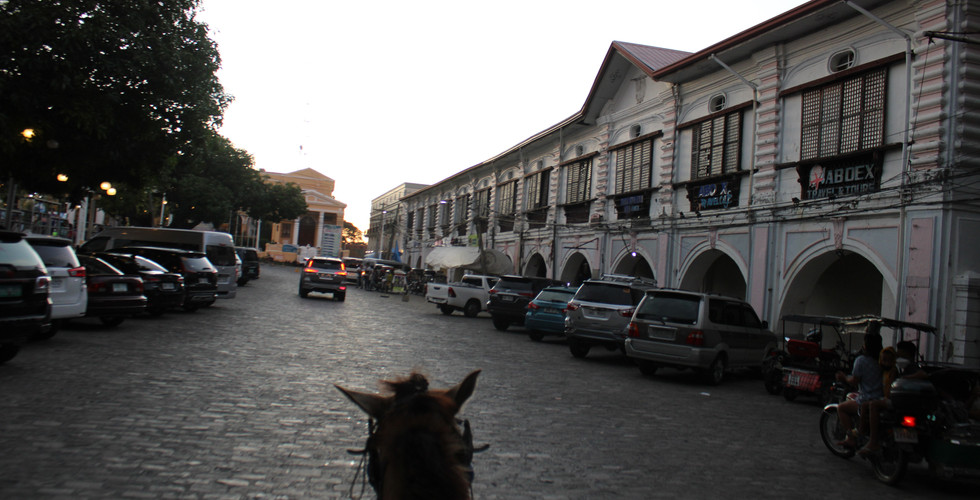


Photos by: Rowena Flores (Not too bad for photos taken on a moving vehicle, I daresay. Though, I would attribute the beauty of the photos on the surrounding heritage site's natural charm rather than my amateurish snaps).
As the sky grew dimmer, the place lit up with yellow lights all around. The atmosphere glowed with the warm air, surrounding us with a nice, fuzzy feeling as we arrived just in time to see the streets of Calle Crisologo abuzz with tourists who were enjoying their time with the vendors. The scene was just magic. It was like sepia photographs came to life in full color. And I can also feel myself being part of it, with the horse pleasantly trotting slowly in the trafficked road.
The ride came to a halt once we returned to the calesa's (should I call it) parking station. Afterwards, we went to Greenwich for dinner. Like most buildings, it also had the cover of an upper antique exterior, and was given away by the bright lights of the fast food's signpost logo.
The interior, however, was as modern as it can get. By observing the windows, I can see the efforts they made to preserve the timeless aesthetics. The wooden window bars have been chipped at the edges and have shown signs of being weathered by age. I think, for security, and to keep it away from curious, prying hands, glass panes that are hardly visible from the outside were incorporated in the building's interior.


Photos by: Rowena Flores
We also entered 7-Eleven just to see how it looks. It's interiors were more faithful to the olden designs. I can tell that the walls with arched dividers, tiles that faded into the concrete floor, and the elevated half of the store with reddish brown tiles were things from the house's original design that were left untouched.
The groups gathered together in the van, and it was finally time to bid the historic city goodbye. We sped away. Away from the crowds, the bright warm lights, the cobbled roads, and the remaining reminders of the past etched in the town's architecture. In a matter of hours, I'm back in my house with steel bars and glass for windows.
The experience was both awe-inspiring and humbling. Vigan would remind me how far we have gone from history until now.
Comments